
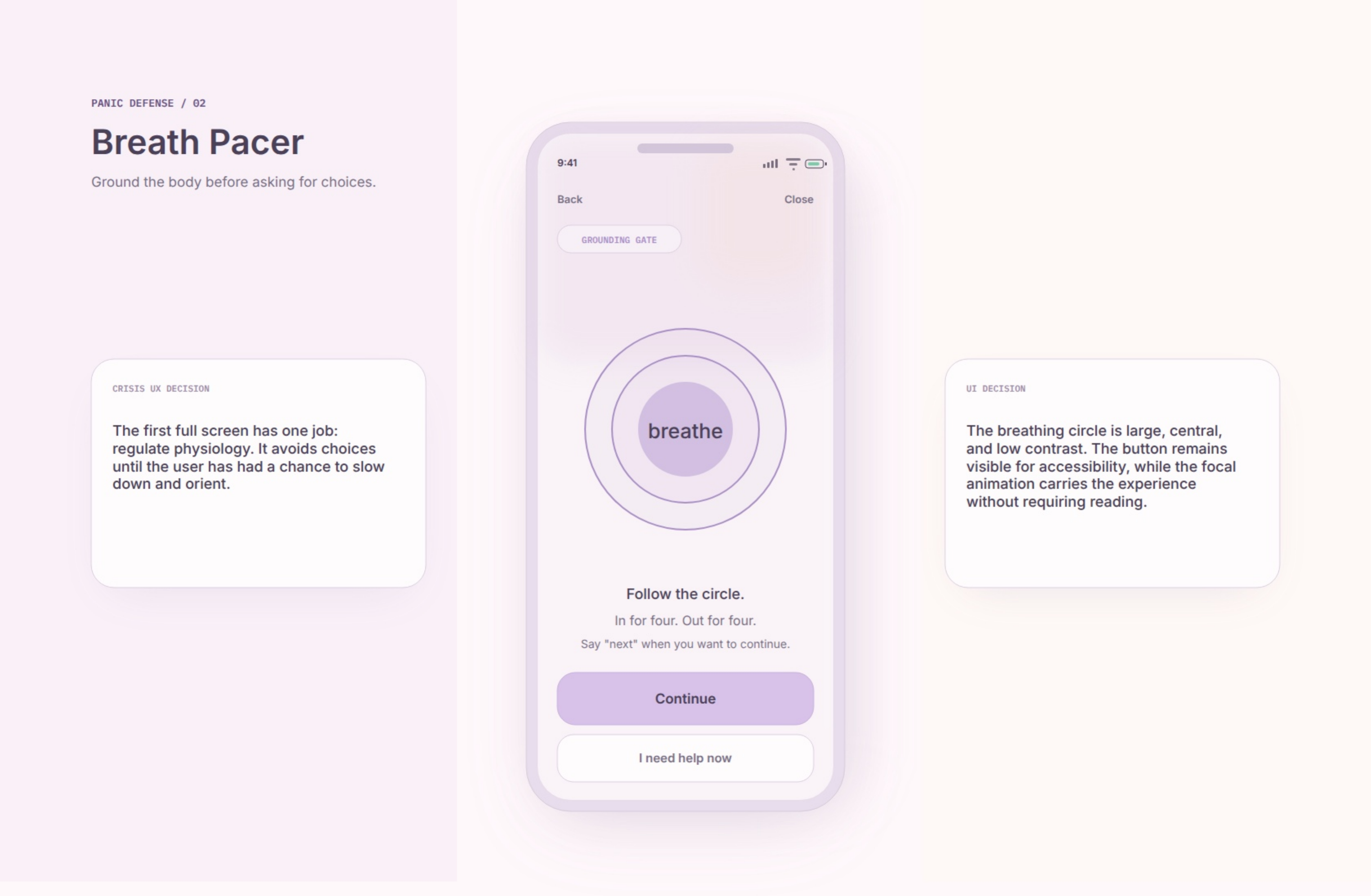
Panic Defense is useful because it starts from crisis-state cognition instead of wellness-app convention. The interface assumes the user may have little attention, shaky motor control, and almost no tolerance for menus or dense copy.
The strongest decision is that exit is a success state. The app is not trying to retain the user after a panic moment. It is trying to help them return to baseline and leave cleanly.
What stands out
- Widget-first entry with no browse step.
- Grounding before self-assessment.
- One branch question: better, same, or worse.
- Support options without alarmist escalation.